


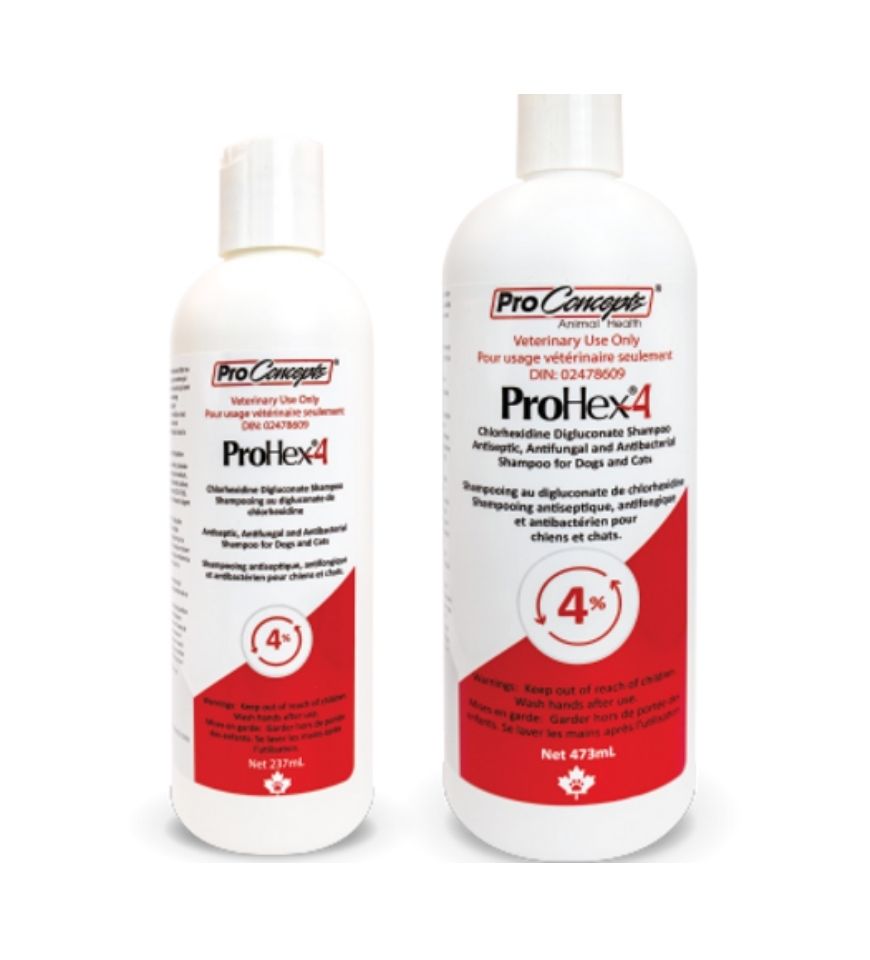

ProHex-4 Shampoo
Antiseptic, Antifungal and Antibacterial Shampoo for Dogs and Cats.
ProHex Shampoo Indications
ProHex is indicated as an aid in the treatment of superficial skin conditions caused by bacteria, fungi, ringworm and yeasts which may be responsive to the activity of chlorhexidine. ProHex is indicated for dogs and cats.
Active Ingredient
2.0% w/w Chlorhexidine Gluconate.
Directions For Use
Shake well before using. Thoroughly wet the animal’s coat with cool to tepid water. Massage into the skin and coat to create a generous lather. Wait 5-10 minutes and rinse well. May be used once or twice a week or as directed by your veterinarian for the specific skin disorder being treated.
Contraindications
Consult a veterinarian before using on a debilitated animal or if not possible, refrain from using.
Cautions: For topical use only. Avoid contact with eyes or mucous membranes. If contact occurs, rinse thoroughly with water. If irritation develops, discontinue and consult your veterinarian.
Storage
Store in a cool dry place (15°C - 30°C). Do not freeze.
| Title |
Default Title |
|---|
Your Custom field here
Frequently ask questions
Years of research by food scientists, chemists, pet nutritionists and veterinarians go into the development of commercially-prepared pet food and these foods are manufactured to offer pets the healthiest and safest food possible. There are several risks associated with homemade pet food. For example, improperly cooked or raw food carries a high risk of bacterial contamination, which can be inadvertently transferred to the human family members in the household. It is also difficult to regulate the nutrients in homemade food which may mean your pet gets too much or too little in the way of vitamins and minerals. Too much calcium, for example, can result in growth problems, particularly for puppies and kittens, while too little calcium can cause weak bones that are susceptible to breaks.
Dog and cat food is designed to meet the special dietary needs of each species. Cats and dogs should not share food or eat the other’s food because it will not provide the pet with the appropriate essential nutrients.
There are two options for feeding schedules. Some pet owners feed their cats and dogs “free choice”, meaning a set amount of food is put out and the pets can eat throughout the day. Alternatively, you can provide a set amount of food at specific meal times during the day. If you are uncertain about how often you should feed your pet, consult with your veterinarian.
It is not generally necessary to change your pet’s food. Pets like routine, including eating the same food every day. If you need to change their food, perhaps because your veterinarian has recommended a specially formulated food, it is best to change it gradually. Start by mixing some of the new food in with your pet’s current food. Over the next three to five days, gradually increase the amount of new pet food and decrease the amount of current food. This process will help your pet adapt to the new food and reduce the likelihood of an upset stomach.
Dogs and cats should typically be bathed once a month. Outdoor cats or pets with specific needs (e.g., fleas) may require more frequent baths. Over-bathing can dry their skin, so use moisturizing shampoos if needed.
Puppies/kittens need calorie-dense food for growth. Adult and senior pets require age-specific formulas. Check labels for AAFCO life-stage compliance.
Kittens/Puppies: Every 3–4 weeks until 16 weeks old.
Adults: Annual checkups.
Seniors (7+ years): Biannual visits.
Pet owners should always first consult their veterinarian should their pet become ill. This is especially important in the case of a veterinary medical emergency. A veterinarian can treat and stabilize the pet and work to diagnose the cause of health issues. If the food is a suspected source of the issue, the pet owner should contact the company listed on the label. Pet food companies want to hear from their customers, especially if an issue is suspected. Most companies have an incidence reporting system where they can track whether there has been more than one incident reported. Pet owners should retain the original packaging, and any unconsumed product if possible. Unopened containers of product from the same lot can be particularly helpful. Pet food companies need specific product information — including brand name, product name, and lot code, all of which can be found on the product packaging — to help determine if there is an issue. It will also be helpful to put the pet food company in contact with the veterinarian who treated the pet. Pet owners can also notify their retailer that they have a concern.